
Fort Collins Previous-Resident Sources
Previous residents of Fort Collins leave different traces depending on the year. Larimer land records reach back to 1862, but the public Landmark Web index begins in 1971. Fort Collins directories begin with a verified 1902 volume and continue in uneven runs. Newspapers, census schedules, permits, and vital-record clues fill the spaces between ownership transfers.
| Source | Years It Covers | Where Held | What It Shows |
|---|---|---|---|
| Larimer land records | 1862 forward | Clerk & Recorder | Recorded parties, legal descriptions, and transfers |
| Landmark Web index | 1971-present | Online; images gated | Grantor, grantee, date, reception, deed type, pages |
| Fort Collins directories | 1902-present, with gaps | History Connection and library | Street Guide occupants and address clues |
| Telephone books | 1927 and later runs | History Connection and library | Subscriber names, not every household |
| Newspapers | 1874-present holdings with gaps | Library, microfilm, and CHNC | Obituaries, notices, address changes, and community events |
| Census schedules | 1870-1910, 1885, 1920, 1930 references | Library and archive databases | Household composition on an enumeration date |
| City permits | Current and expired layers | FCMaps and city requests | Building work and permit timing |
| Sanborn maps | Local collection found; year list unverified | History Connection map collection | Footprint, use, materials, and numbering context |
| Vital records | Birth local 1900-present; death local 1975-present | Larimer Health and state custodians | Restricted family and death clues |
Start with the source that matches the Fort Collins question. Use the Assessor and GIS for a current parcel anchor, the recorder for a transfer, the Street Guide for an occupant, and the library or archives when the address predates a web index.
Fort Collins Deed Records From 1971
The Larimer Clerk & Recorder Landmark Web index is the main online trail for prior Fort Collins owners. The deed chain supplies ownership periods that can be paired with directories. Search data is free, but anonymous visitors do not receive images. A free account permits watermarked image viewing, and registered users can purchase unwatermarked downloads. A street address alone is not its strongest key.
- Open the Fort Collins Assessor result for the address and save its parcel, account, subdivision, lot or block, and short legal description.
- Use the current grantee or owner name, the legal text, a date range, or a reception number in Landmark Web.
- Read the deed's grantor, grantee, record date, document type, number of pages, and linked documents.
- Search the seller as a prior grantee, adjusting for initials, entity names, trusts, estates, and spelling variants.
- Keep the reception number and legal description with each step, then leave the online index at its 1971 cutoff.
- Grantor and grantee
- The grantor transfers an interest; the grantee receives it in the recorded instrument.
- Chain of title
- The ordered sequence of recorded transfers that connects one parcel interest to an earlier one.
- Legal description
- The parcel text used in the instrument, often more stable than an old street label.
- Criss-cross directory
- An address-organized directory; Fort Collins' Street Guide serves this role even though a separately titled local series was not located.
- Enumeration district
- The census area assigned to an enumerator, useful for finding a historic household but not a year-round address roll.
Fort Collins Households in Directories
Recorded owners are only one layer of previous residents. The Fort Collins directory volumes have an alphabetical people section and a Street Guide that reverses a historic address into an occupant name. The local Fort Collins collection also has business-by-type and rural sections. A separate series titled criss-cross directory was not located, but the Street Guide is the documented local equivalent for address-to-occupant work. The complete collections and their year runs belong with the Fort Collins city directory material.
Known Fort Collins city-directory runs include 1902, 1903, 1904, 1906-1909, 1909/10, 1910/11, 1913/14, 1917, 1919, 1922, 1925, 1927, 1929, 1931, 1933, 1934, 1936, 1938, 1940, 1948, 1950, 1952, 1954, 1956-60, 1962-64, 1966, 1968-73, 1975-77, 1979, and 1980 onward. There is no known run for 1941-47, so telephone books and newspapers matter in that gap.
Obituaries, cemetery records, and permitted probate or deed research can close a Fort Collins household trail. A grave-space result at Grandview or Roselawn is a burial clue, not a current address. A newspaper notice can explain a move or death, but OCR errors and omitted households must remain visible as uncertainty.
Lawful use. Previous residents research in Fort Collins is appropriate for house history, genealogy, reconnecting, and personal records. Do not use a historical clue to watch, harass, intimidate, or harm a living person.
Start a Fort Collins Resident History
Use the Larimer Assessor search for the current Fort Collins address. It starts a previous residents search with the parcel number, account or schedule number, owner name, occupancy description, situs address, ZIP, subdivision, short legal description, tax district, and map link. The public detail tabs include General Info, Building Info, Tax History, Property Map, and Comparables. A result is a current property anchor, not proof that every person who lived there is named.
Next open the Larimer Land Information GIS viewer. Identify the Fort Collins parcel, then note the subdivision, platted lot or block, recorded dimensions, adjacent geography, and any sales layer. The Assessor's Owner and Owner Location data separate mailing fields from the physical situs. That split helps preserve the right key when a Fort Collins owner received tax mail elsewhere.
For help with a current Fort Collins parcel, the Assessor lists 970-498-7050 and LCassessor@co.larimer.co.us. The public viewer and downloadable data are online, while the Assessor counter at 200 W Oak Street, second floor, and county public viewing stations provide an in-person fallback.
Fort Collins Grantor-Grantee Books Before 1971
Fort Collins land records reach back to 1862, but the online Landmark Web index begins in 1971. At the break, move to the Larimer County Clerk & Recorder Recording Department at 200 West Oak Street, first floor, for pre-1971 grantor-grantee books. These books require a name and legal-description approach. They are not a simple historic street-address search.
When a Fort Collins book entry supplies a reception or CFN number, request a copy by mail, phone, or in person. Counter copies are listed at $0.25 per page, with a $1 per document certification addition. Online index data are free; image access uses registration and payment choices. Free recording-activity notification can watch exact name variants, but it does not remove a document. Hand-carried recording documents go to the same office, while recorded submissions can be mailed to Clerk & Recorder, Attn Recording, PO Box 1280, Fort Collins CO 80522.
For a Fort Collins record not held by Recording, use a narrow Larimer CORA request form with the parcel, parties, date range, and document type. County guidance targets viewing within three working days, allows up to a seven-day extension, and may charge $0.25 per page plus staff time. Library staff, the History Connection, CSU Archives, and the Colorado State Archives are the historical fallback when the old book points to a source outside the county index.
Fort Collins Directories Paired With Census
Census records and directories answer different Fort Collins questions. A census records household composition on an enumeration date. A directory can place a name, occupation, and address in an intervening year. The History Connection quick guide identifies federal 1870-1910 access, the 1885 Colorado census, Larimer material for 1920, and Colorado 1930 access. Public availability follows the federal 72-year release rule, so a census is not an annual address roll.
- Find the closest Fort Collins Street Guide entry and copy the period street spelling, number, occupant, occupation, and any spouse or widow notation.
- Check the nearest released census year for household members and an enumeration district, while keeping the census date separate from the directory date.
- Use a telephone book, newspaper, or later directory to bridge a skipped year instead of calling a gap a move.
- Compare the household clue with the deed, parcel legal description, obituary, cemetery result, and permit date.
The Fort Collins library route includes Old Town Library at 201 Peterson Street, genealogy databases, microfilm, and one-on-one help from the Larimer County Genealogical Society most Thursdays from 1 to 3.
Research Fort Collins Resident Building History
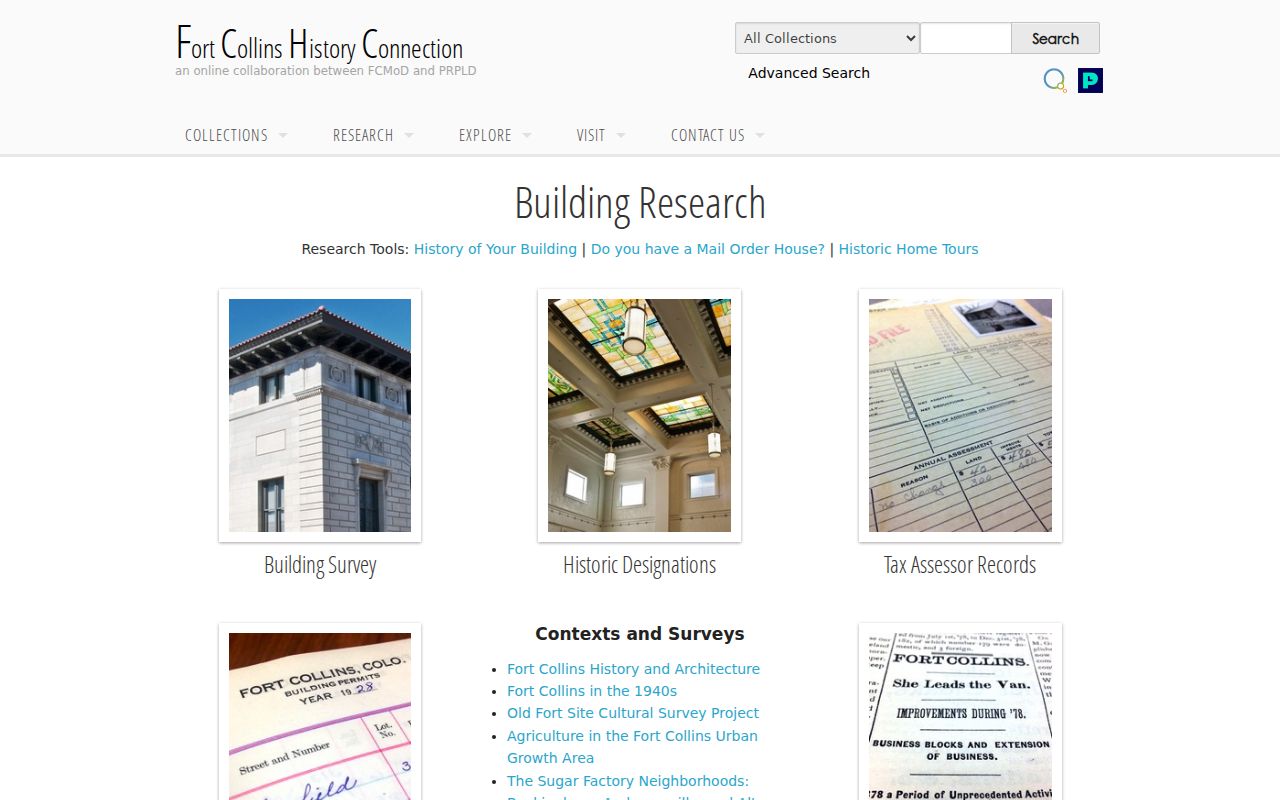
The Fort Collins History Connection Buildings collection and the city's Historic Property Resources route add context that a deed cannot. Tools named in the local research include “History of Your Building,” building surveys, building permits, Tax Assessor Building Records, historic status and district checks, Mail Order House material, and historic-home tours. A permit can date an alteration or show the person who requested work, but it is not a full ownership or occupant history.
The History Connection building-history collection is the local starting point for a Fort Collins house-history search that needs surveys, permits, or historic-property context.
For Fort Collins preservation questions, the city route lists preservation@fortcollins.gov, 970-224-6078, and 281 N College. Request the underlying permit or site-plan file when a map layer shows only a point.
Sanborn maps can show footprints, use, materials, outbuildings, and numbering context. A Fort Collins map collection was located, but no verified local Sanborn year table was captured. Keep that gap in the worksheet rather than assigning an unconfirmed year. The FCMoD archive route lists 970-221-6688 and archiveandcollections@fcmod.org for walk-in or appointment research.
Fort Collins Deed Entity Names
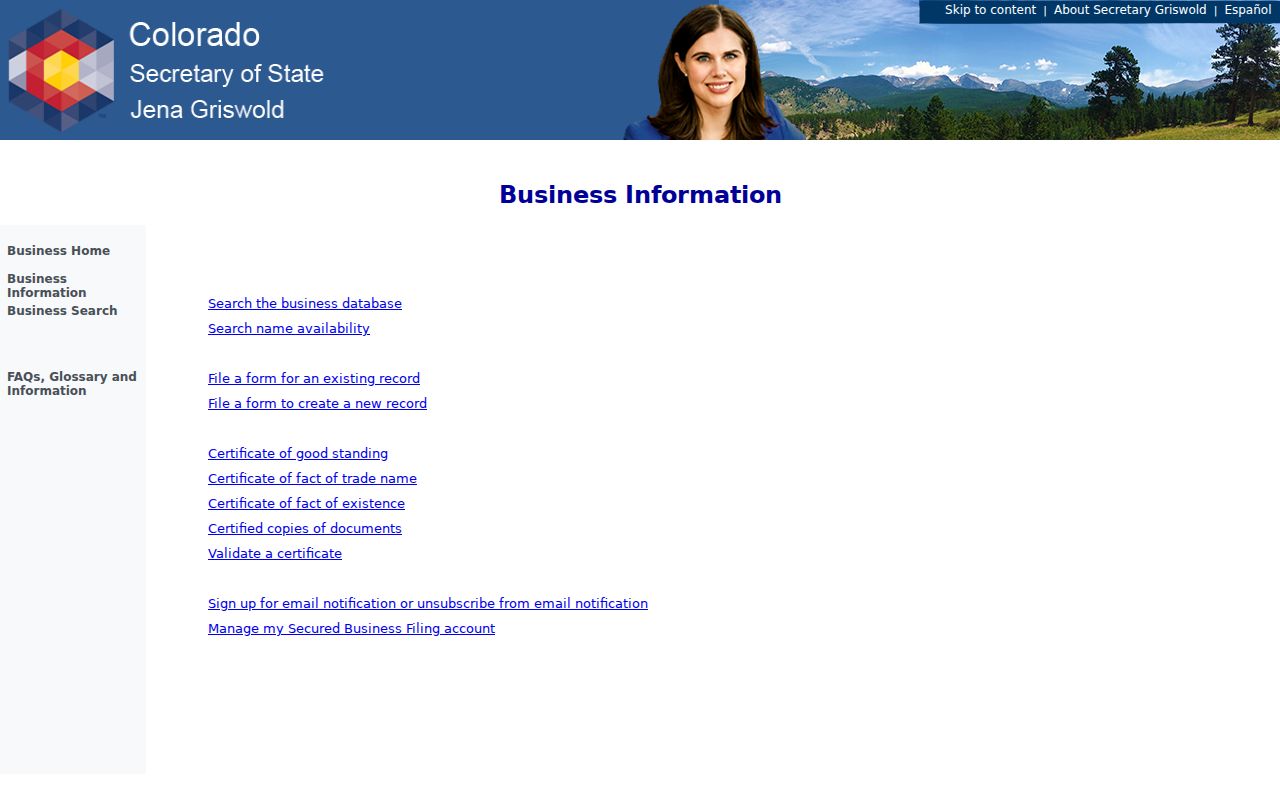
Older Fort Collins property chains may shift between an individual, a company, a trust, an estate, or a business name. The deed index can identify the recorded party, but the party type is not automatically a resident. When an entity appears in a transfer, the Colorado Secretary of State Business Database can add a filing or trade-name context. Search modes include business name, trade name, ID number, document number, and follow-on document orders.
The Colorado business search is useful when a Fort Collins deed chain contains an LLC, estate, or trade name that needs to be kept distinct from a household.
Use a Fort Collins filing as a cross-check for the name and date. It should not replace the recorded deed, legal description, or a dated directory entry.
Fort Collins Street Records That Break Searches
Address continuity can fail because a name changed, not because a record vanished. A previous residents trail needs that bridge. Fort Collins history pages document Tres Colonias lettered streets renamed in 1975-76 to recognize local history and leaders. The research does not provide a complete citywide renaming table. Bridge a suspected change with the old directory spelling, historic maps, the parcel legal description, and preservation staff.
Larimer's current Fort Collins-area addressing work is a separate, live issue. County road-name regulations date to 2006, the LETA agreement took effect November 1, 2021, and a new Road Naming and Site Addressing Resolution was adopted in September 2025. The project addresses duplicate or similar roads, unnamed private drives, and odd-even or nonsequential numbers. Preserve every version of the address in the Fort Collins house-history worksheet.